All stories · Case study
Wild generated £65M in 2024 with its refill business model
Shopify has published a case study on Wild, a UK personal care brand specializing in refillable products such as deodorants and body wash. In 2024, the brand generated £65 million in revenue across four online stores, with 40% to 50% of customers choosing subscription plans.
Share: WhatsApp · Telegram · X · Facebook · LinkedIn · Email

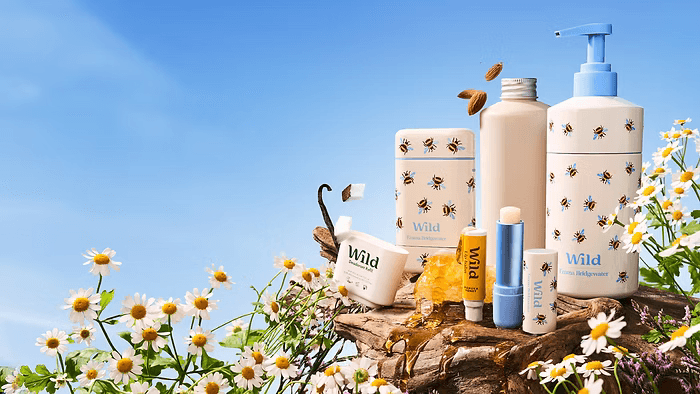
Wild offers subscribers a 20% discount on every order. According to Shopify, these customers also generate approximately £20 more in lifetime value (LTV) than one-time buyers.
For merchants selling products customers regularly replenish, Wild offers an interesting example of how subscriptions can encourage repeat purchases. But its results also highlight why discount levels need to be evaluated against product margins and actual repurchase behavior, rather than copied from another brand.
20% is Wild's discount, not an industry standard
Founded in 2020, Wild sells reusable cases and replacement refills for personal care products, including deodorants and body wash. Its business model combines reusable packaging with recurring purchases of replacement products.
To encourage customers to subscribe, Wild offers a 20% discount compared with one-time purchases.
Subscription brands, however, experiment with different discount structures. For example, a skincare subscription page reviewed by landing-page designer Raphael Oyelami displayed discount tiers of 10%, 25% and 45%, alongside an option to skip deliveries or cancel at any time.
This is an example of how an individual brand structures its offer, not evidence of an industry-wide benchmark.
The right discount depends on product margins, replenishment frequency and how long customers remain subscribed.
The important question is not whether 20% is competitive. It is whether the additional value generated by subscribers can cover the margin sacrificed on every repeat order.
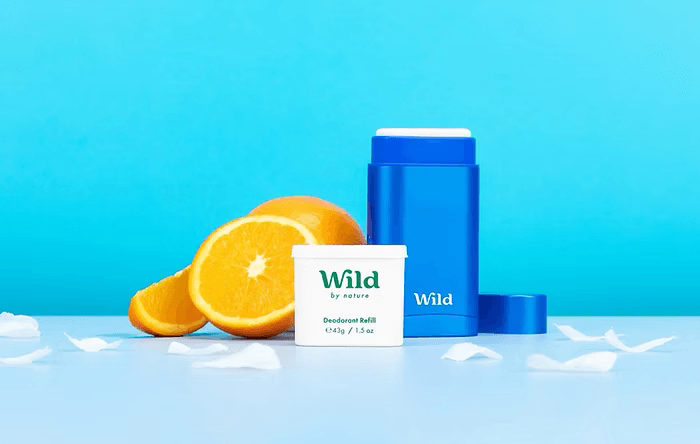
What Shopify's case study tells us, and what it leaves out
In its Wild case study, Shopify highlights several performance metrics:
- £65 million in 2024 revenue across four online stores serving the UK, US, Australia and Europe.
- 8% conversion rate, which Shopify describes as above the industry average.
- 40% to 50% of customers choosing subscription plans.
- Approximately £20 higher LTV from subscription customers compared with one-time buyers.
Wild also offers subscribers a 20% discount.
These figures make a compelling growth story. But the £20 LTV difference needs closer examination.
Shopify does not explain whether the additional £20 represents revenue or profit, whether the 20% subscription discount has already been deducted, or what measurement period was used. The case study also does not provide detailed cohort data comparing subscribers with one-time buyers.
That distinction matters.
If the £20 represents a revenue-based LTV difference before discounts, it cannot be treated as £20 in additional profit. If the figure already accounts for subscription discounts, the economics look very different.
The £65 million revenue figure also needs to be considered separately from subscription performance. It represents Wild's overall revenue across four stores. It does not establish how much revenue subscriptions generated or how much of the brand's growth came from its discount strategy.
Shopify's case study is useful for understanding Wild's business model, but it is not a detailed financial breakdown of subscription profitability.
The discount applies to every order. The LTV benefit builds over time.
This is the central economic trade-off behind subscription commerce.
Every time a customer reorders, the brand gives up part of the order value through the subscription discount. The additional LTV, meanwhile, accumulates as the customer continues purchasing.
Wild's refill model makes this trade-off easier to understand.
According to Double V Consulting's analysis, a Wild deodorant refill typically lasts around four to six weeks. The analysis cites US prices of $14 for a one-time refill and $11.20 for a subscription refill.
That is a $2.80 difference on every refill purchase.
The longer a customer stays subscribed, the more repeat orders the brand can potentially generate. But the brand also gives up $2.80 on each of those orders, before considering other costs.
For merchants evaluating their own subscription offers, the calculation should start with contribution margin, not headline revenue.
A practical way to assess the trade-off:
- Calculate contribution margin per order. Deduct product costs, fulfilment, shipping subsidies, payment processing fees and expected return costs.
- Compare customer groups. Measure subscribers against one-time buyers over the same period, such as their first six or twelve months.
- Calculate incremental contribution. Compare the total contribution margin generated by each group after subscription discounts.
- Check the payback period. Determine how long it takes for the additional contribution from subscribers to recover the margin sacrificed through discounts and any additional acquisition costs.
Shopify's Customer Lifetime Value guide distinguishes between revenue-based customer lifetime value and margin-adjusted value. Its framework considers gross margin, purchase frequency and customer lifespan rather than treating total customer spending as the whole story.
A customer who spends more is not automatically a more profitable customer.
When copying Wild's 20% discount is a bad idea
The subscription model is not equally suitable for every beauty store.
It is more likely to work when:
- Products are consumed regularly and need replenishing.
- Customers have predictable repurchase cycles.
- Product margins can absorb recurring discounts.
- Subscribers remain active long enough to generate meaningful repeat contribution.
It becomes riskier when:
- Customers purchase only occasionally.
- Products have thin margins.
- Customers cancel before the business recovers the margin sacrificed through discounts.
- The discount attracts customers who would have purchased at full price anyway.
Consider two stores. One sells deodorant refills that customers may need every four to six weeks. Another sells skincare treatments that customers replace every six months.
Both can offer 20% off subscriptions. But the first store has more opportunities to recover the discount through repeat purchases within the same period.
The second may be giving away margin for a commitment that generates very few additional orders.
This is also why Wild's £65 million revenue should not be used as proof that its 20% discount works. The brand's growth comes from more than subscriptions.
Wild has built a broader business around refillable products, product innovation, customer experience and retail distribution. Unilever completed its acquisition of Wild in April 2025.
Wild Cosmetics Limited's subsequent 2025 annual filing reports turnover of £95 million, up 43.7% from £66.1 million in 2024. The filing discusses its omnichannel strategy and international expansion as important growth drivers.
Source: Wild Cosmetics Limited, 2025 annual filing at Companies House.
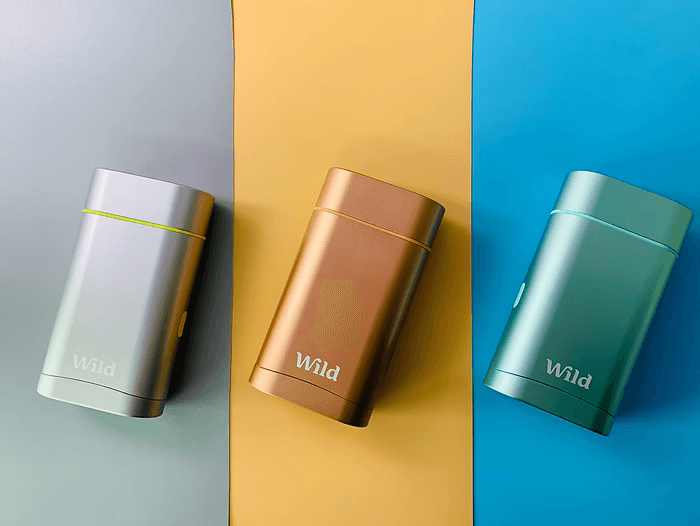
The best parts of Wild's subscription experience are not discounts
There is another part of Wild's strategy worth paying attention to: reducing friction in the subscription experience.
According to Shopify, customers can manage their subscriptions, customize orders, pause deliveries or cancel at any time. Wild also consolidated two separate checkout journeys, previously split between subscribers and one-time buyers, into a single checkout experience.
Shopify reports a 1.5% increase in conversion following the move to checkout extensibility. The case study does not clarify whether this refers to a relative increase or a 1.5 percentage-point increase.
These changes matter because subscription growth is not just about offering an attractive price. Customers also need to feel comfortable committing to recurring purchases.
Clear cancellation policies, flexible delivery schedules and a straightforward checkout can make subscribing easier without directly reducing the margin on every order.
For Shopify merchants, this is an important distinction:
Discounts change the economics of every transaction. A better subscription experience can reduce the friction that prevents customers from subscribing in the first place.
Before choosing a subscription discount, measure the trade-off
Wild's 20% discount and approximately £20 higher LTV offer a useful starting point for understanding subscription economics. They do not provide a universal answer.
Before introducing or changing a subscribe-and-save offer, merchants should know:
- How much contribution margin does a subscriber generate after discounts?
- How many repeat orders does that customer actually place?
- How does that compare with a one-time buyer over the same period?
- How long does it take to recover the margin given away?
- Is the subscriber genuinely more valuable, or simply receiving a discount on purchases they would have made anyway?
The key is to compare incremental customer value after discounts, not just total LTV.
If your store offers subscription discounts, what percentage do you give customers? How much additional value do subscribers generate after discounts, and over what period do you measure it?
Sources
Original research sources
- Shopify: Wild case study. Primary source for the £65M, 8%, 40% to 50%, 20% and approximately £20 figures.
- Double V Consulting: Wild's refillable deodorant model. Refill cycle and US refill pricing.
- Conscious Commerce: Wild. Additional context on subscription strategy and payback.
- Whito: Wild's refill model. Independent analysis of the business model.
- Raphael Oyelami's subscription pricing example. An individual skincare landing-page example, not an industry benchmark.
Additional sources
- Shopify: Customer Lifetime Value guide. Supports the distinction between revenue-based and margin-adjusted CLV.
- Wild Cosmetics Limited: 2025 annual filing. Official company filing showing 2025 turnover and discussing omnichannel and international expansion.
- Modern Retail: How Wild scored a sale to Unilever. Additional acquisition context.
Ask AI next
- What payback-period benchmarks exist for subscription discounts in DTC, so I can compare against my own margins?
- Is Shopify's reported conversion lift from checkout extensibility relative or a percentage-point increase?
- What Shopify apps calculate margin-adjusted LTV for subscribers vs one-time buyers?
- Are there other refill-subscription brands with published subscription adoption rates comparable to Wild's?
- What early signals show a subscription discount is just subsidizing customers who'd buy at full price anyway?