All stories · Article
BFCM's three aftershocks: Order inquiries, returns and chargebacks
Share: WhatsApp · Telegram · X · Facebook · LinkedIn · Email

The December 2nd problem: Why the real BFCM bill arrives weeks after the sale
Black Friday ends on November 27. Cyber Monday follows on November 30. But for many Shopify merchants, the busiest part of the season does not end when the promotions do.
It starts showing up in the inbox.
A customer wants to know where their order is. Another wants to return a gift. Someone else says the package never arrived. Each question looks routine on its own. Together, they create a second workload that can stretch from early December into January, long after the sales dashboard has stopped celebrating.

Atiqur Rahman Jason calls this the December 2nd problem: the operational cost of BFCM that most merchants forget to plan for.
The December 2nd problem comes down to three questions
The first wave is usually straightforward: customers want to know where their orders are.
On November 14, a Shopify Community discussion by a support-tool builder described an inbox filling overnight with three recurring questions:
- Where is my order?
- How do I return this?
- How long does shipping take?
By morning, some customers had already opened chargebacks or purchased elsewhere. Read the Shopify Community discussion.
The same concern appeared in Tapuwa Makani's November discussion, which identified order status, returns and delivery times as recurring sources of Black Friday customer-service questions.
The problem is not that these questions are complicated. It is that they arrive repeatedly, often when a small store has no one available to answer them.

For a merchant with one or two people handling operations, every routine tracking question takes time away from fulfillment problems, delayed shipments and more complicated customer issues.
And the inbox is only the beginning. Returns and payment disputes can continue long after the initial support spike.
When does each wave arrive after November 27?
The post-BFCM workload does not arrive all at once. It builds in stages.
November 27 to November 30: The sales peak
Black Friday and Cyber Monday bring a concentrated increase in orders. The immediate operational priority is fulfillment: processing orders, communicating delivery expectations and making tracking information accessible.
December 1 to the first weeks of December: The WISMO wave
WISMO stands for "Where Is My Order?" As customers wait for their purchases, questions about shipment status and estimated delivery become more visible.
A November 14 Shopify Community discussion described exactly this pattern, although it is an individual industry account rather than a representative survey of Shopify merchants.
Mid-December to January: Returns and payment disputes
The financial impact can arrive later than the customer-service questions.
A Chargeflow Data Lab study, covering approximately 3.03 million disputes across 14,500 merchant accounts and three peak seasons, found that:
- 34.7% of Black Friday weekend chargebacks in 2025 were classified as "item not received", compared with 19.9% during a normal week.
- The typical item-not-received dispute arrived 23 days after the order.
- Merchants won these disputes about 1.5 times as often when they had strong evidence.
That 23-day delay matters. An order placed on Black Friday can generate a delivery dispute just before Christmas, when the store is already managing another wave of orders.
But delivery disputes are not the end of the timeline.
In its companion report, Holiday Chargebacks Peaked in January, Chargeflow found that the median delay across all disputes on Black Friday weekend 2025 orders was 25 days. Nine in ten were filed within 64 days.
More importantly, January had approximately 1.4 times as many disputes filed per day as November in both measured seasons, 2024–25 and 2025–26.
The takeaway is clear: the operational and financial workload of BFCM can continue well into the new year.
One distinction is worth keeping in mind. The 34.7% figure represents the share of chargebacks, not the share of orders. It does not mean one in three Black Friday orders will result in a dispute.
Nor does the increase in delivery claims automatically mean fraud is increasing. In the same 2025 dataset, the share of disputes classified as fraud actually fell from 37.8% to 27.2% over Black Friday weekend.
This is why delivery evidence matters. A merchant needs to be able to show what happened to an order, not simply assume that every non-delivery claim is fraudulent.
Answer the three questions before November 27
Small stores do not need a large customer-service department to reduce repetitive support work. They need to make essential information easy to find before customers have to ask.
Here are three practical checks to complete before BFCM.
1. Make the holiday return deadline visible
Do not make customers search through several pages to understand whether a gift can still be returned after Christmas.
Everlane provides a useful example. Its Holiday 2026 return policy states that orders shipped between November 15 and December 22 can be returned through January 22, 2027.
The lesson is not that every store should adopt the same return window. It is that the deadline should be communicated clearly, especially for products purchased as gifts.
2. Make delivery expectations clear before checkout
Show estimated delivery times and relevant order deadlines where customers make their buying decisions.
If an order is unlikely to arrive before Christmas, say so before checkout rather than waiting for customers to contact support.
Shopify's order status and tracking documentation explains how tracking information can be shared through the order status page, shipping notification emails and the Shop app.
Merchants should also check that their customized email templates still include the correct order-status link.
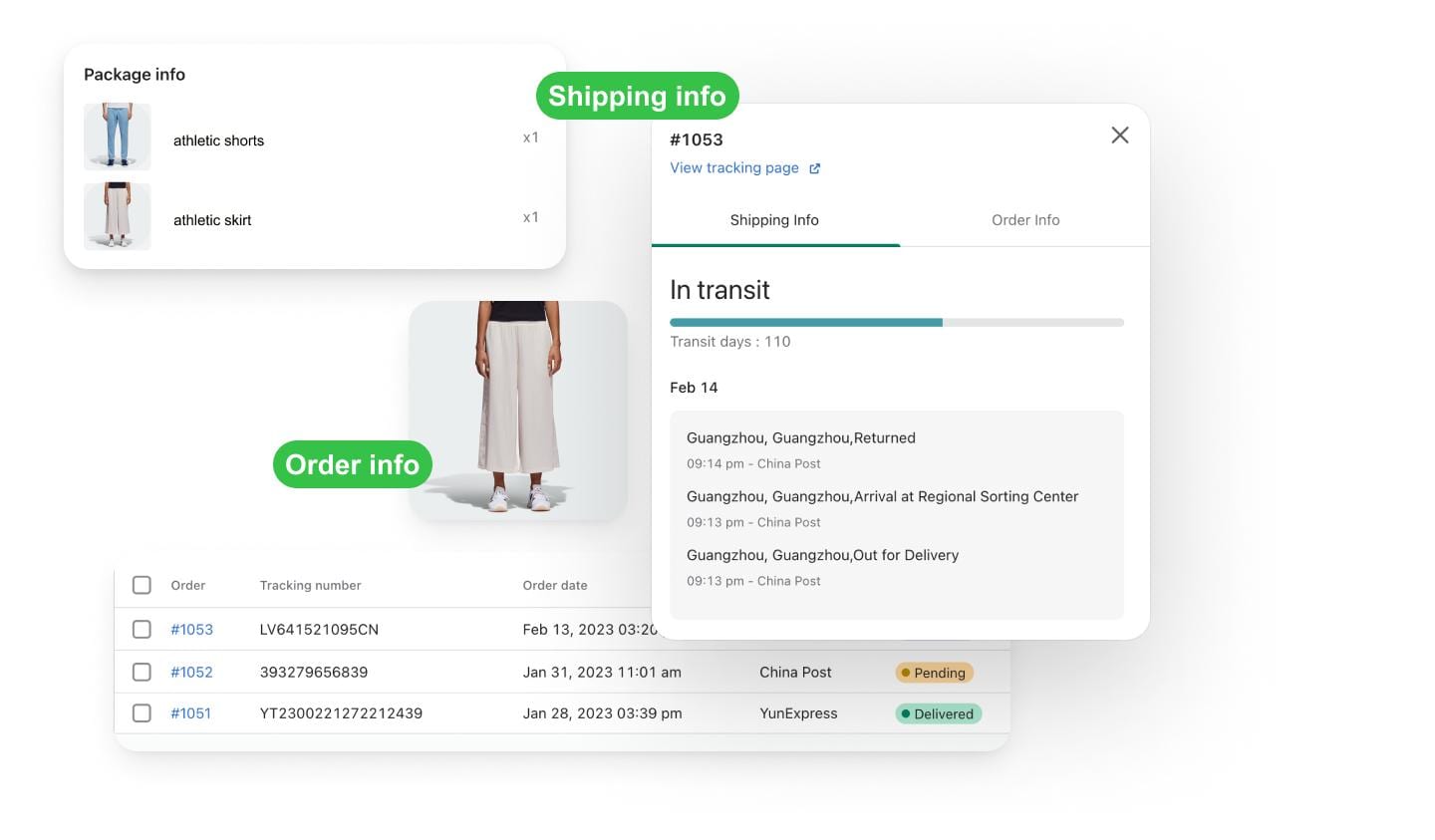
3. Keep delivery evidence attached to each order
A tracking number is not just a convenience for customers. It can become important evidence when a payment dispute arrives weeks later.
Keep the tracking number, carrier information, shipment scans and delivery confirmation accessible from the original order.
According to Chargeflow's research, strong evidence was associated with substantially better outcomes in item-not-received disputes. The report also found that some disputes went unanswered, resulting in losses that could potentially have been avoided.
For a small team, the practical priority is simple: make sure someone can retrieve the evidence without reconstructing the shipment history weeks after the sale.
Your pre-BFCM operational checklist
- Add the holiday return deadline to your best-selling product pages.
- Show estimated delivery dates and Christmas order cutoffs before checkout.
- Check that order confirmation and shipping emails link to the order status page.
- Verify that tracking numbers and carrier updates are saved against each order.
- Assign someone to monitor returns and payment disputes through December and January.
BFCM is not finished when the last discount expires.
The sales peak lasts a few days. The questions, returns and disputes it creates can last for weeks.
For small Shopify merchants, preparing for that second wave may matter just as much as preparing for the first.
Ask AI next
- What return-policy wording works best to make holiday return deadlines clear on product pages?
- What tools can automatically answer WISMO messages and attach tracking evidence to chargeback disputes?
- Why did fraud-classified disputes drop while item-not-received claims rose over BFCM weekend?
- Does this December WISMO and January chargeback pattern hold across other e-commerce platforms too?
- What early December signals would indicate a store is heading toward a larger January chargeback surge?