All stories · Article
A Seattle startup just raised $15M to become the translator between your store and AI shopping agents
Every AI shopping agent wants access to your store. But connecting each one is becoming a business of its own.
Share: WhatsApp · Telegram · X · Facebook · LinkedIn · Email

On November 5, Seattle-based Firmly announced a $15 million Series A led by Squarepoint Capital, with participation from J.P. Morgan Payments, Mastercard and Samsung NEXT.
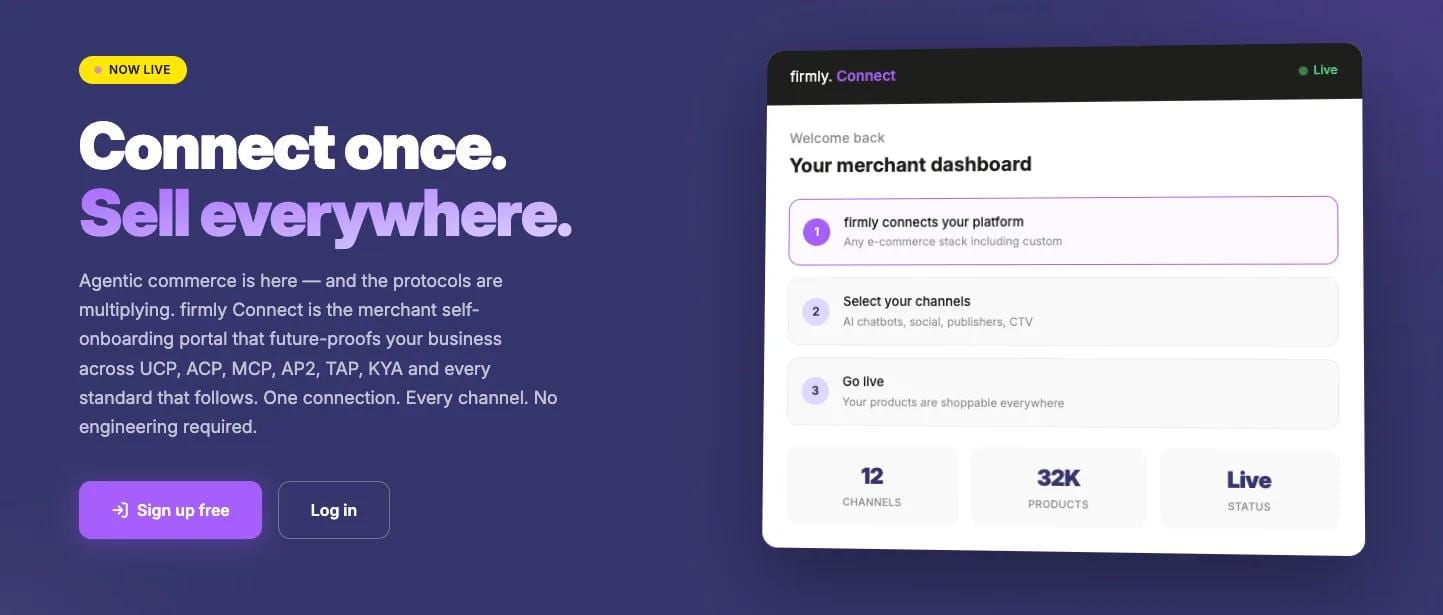
Its proposition is straightforward: connect your store once, and make it accessible across multiple AI shopping agents, marketplaces and other digital channels.
The bigger question is why major payment companies are investing in the infrastructure behind that connection.
Every AI assistant wants its own way into your store
Imagine a customer asking an AI assistant to find a pair of running shoes.
The agent needs more than a product description. It needs access to:
- Product catalogs and variants.
- Real-time inventory and pricing.
- Shopping carts and checkout.
- Payments and order information.
Each new AI shopping destination can require another integration to make all these pieces work together.
For retailers, that creates an engineering problem. Supporting one AI channel is manageable. Supporting ten different channels, each with its own technical requirements, is another matter.
As Firmly CEO Kumar Senthil explained in his funding announcement, merchants cannot keep building a new integration every time another AI assistant emerges.
This is the problem Firmly wants to solve.
One connection, a monthly fee, a one-day setup
Firmly Connect offers merchants a single, no-code integration between their existing commerce systems and multiple AI agents, marketplaces and shopping destinations.
Instead of rebuilding integrations for every new channel, merchants authorize Firmly to connect with their existing commerce infrastructure.
Importantly, merchants retain their role as merchant of record, their payment providers and their customer relationships.
The economics are particularly interesting.
According to GeekWire's November 7 report, citing CEO Kumar Senthil's comments to Axios:
- $2,000–$15,000 per month: Firmly's reported merchant pricing, depending on merchandise sales volume.
- One day or less: The reported time to connect a merchant, including testing.
- Four to six weeks: The time required for a similar integration in 2024.
Firmly also lists Best Buy, Furniture.com and Backcountry among its retail customers.
The shift is worth paying attention to: what once required weeks of engineering work is becoming a packaged service with a recurring monthly price.
Why are Mastercard and J.P. Morgan paying for a pipe?
The investment makes more sense when viewed alongside the wider infrastructure being built for agentic commerce.
There are two broad ways an AI agent can interact with an online store.
Browser-based shopping: An agent navigates a retailer's website, reads product pages and clicks through the shopping process. Meta's Muse is an example of this approach. It also faces limitations: Amazon has blocked Muse from its website and is suing Perplexity over its shopping agent.
Merchant-authorized connections: Instead of navigating the website, an agent accesses product, inventory and checkout information through an agreed technical connection.
Firmly is building around the second approach, while aiming to bridge different agent protocols and shopping experiences.
Mastercard has already established a commercial relationship with the startup.
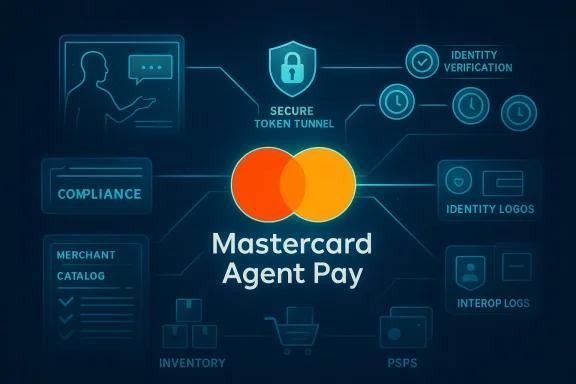
In its September 9 announcement of Mastercard Agent Connect, Mastercard named Firmly as a partner helping merchants extend their product catalogs and shopping experiences into AI channels.
Agent Connect is designed to give merchants, AI agents and payment providers a single integration point rather than requiring thousands of individual connections.
The $15 million round therefore reflects more than investor interest in another AI shopping product. It puts capital behind the infrastructure needed to connect merchants to an expanding agent ecosystem.
Does a Shopify store need a second pipe?
This is where the story becomes more relevant to Shopify sellers.
Shopify already provides an agentic commerce connection for eligible stores.
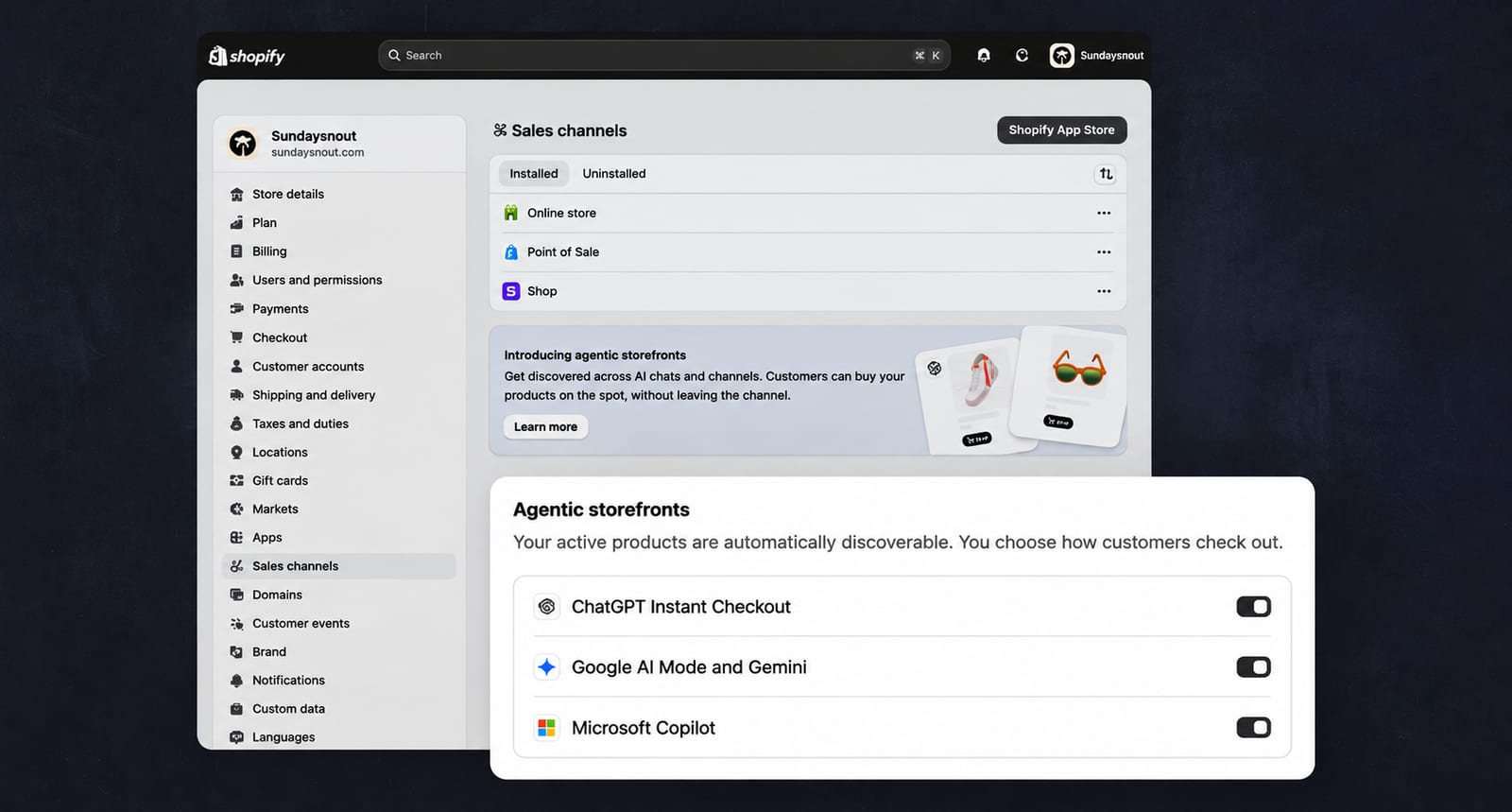
According to the Shopify Help Center, Agentic Storefronts is active by default for eligible stores.
The platform currently supports discovery and shopping across channels including ChatGPT, Google AI Mode and Gemini, Microsoft Copilot and Meta.
Merchants can manage their participation through Sales channels → Agentic in Shopify admin.
They can also review which channels access their product data, manage checkout availability and track sales attributed to AI channels.
Orders from these channels flow into Shopify admin, with the merchant retaining ownership of the customer relationship and post-purchase experience.
So where does Firmly fit?
The two offerings should not automatically be treated as interchangeable. Shopify provides its own distribution infrastructure, while Firmly sells a separate connection layer spanning its supported agents, marketplaces and other destinations.
The available announcements do not establish whether Firmly Connect currently supports Shopify stores or whether a typical Shopify seller would benefit from adding it.
That leaves three questions worth considering:
- Which AI shopping channels does your store actually need to reach?
- Are those channels already accessible through Shopify?
- Would the additional reach justify another monthly infrastructure fee?
For now, there is no reason to rush into another integration simply because a startup has raised $15 million.
But there is a question worth asking:
Who controls the connection between your store and the AI agents that will sell your products next?